Chitwan Jungle Safari
Tours & tickets

Hand-picked by our editors — only the best 5 safari packages from 40 reviewed.

Open today 06:00 – 18:00
Attendance: Light — weekday morning
Arrive between 06:00 and 08:00 for cooler weather and better light
Free cancellation Instant confirmation Mobile voucher Verified partner Book now, pay later
Tickets

Choose your ticket

Verified partners for every tour, free cancellation where available, and instant confirmation on every booking.

Chitwan Jungle Safari: 3-Day Tour from Kathmandu or Pokhara 72 hr
Guided Experience

Chitwan Jungle Safari: 3-Day Tour from Kathmandu or Pokhara

4.5 (168)
€131
per person
Instant Mobile voucher Flexible — change up to 24h

3 days of jeep safaris, canoe rides and Tharu culture in Chitwan National Park, all-inclusive.

Reserve
Chitwan Jungle Safari: 3-Day Wildlife & Tharu Culture Tour 72 hr
Guided Experience

Chitwan Jungle Safari: 3-Day Wildlife & Tharu Culture Tour

4.7 (115)
$137
per person
Instant Mobile voucher Flexible — change up to 24h

3 days of jeep safaris, canoe rides and Tharu culture in Nepal's Chitwan National Park.

Reserve

Prices from verified partners. Availability updates in real time at checkout. Free cancellation policies apply where shown.

What you'll do

Inside a tour, step by step

  1. 01 30 min

    Arrival at Sauraha

    Reach the tourist zone, confirm your entry point, and check the day’s safari timing before moving to the park gate.

  2. 02 45 min

    Visitor center stop

    Start with the visitor center in Sauraha for wildlife and conservation context before entering the safari zone.

  3. 03 2–4 hours

    Park entry and safari

    Use the booked safari product to enter through the assigned gate, then follow the guide on jungle roads and river-edge viewing points.

  4. 04 45 min

    Optional breeding center add-on

    If included in your package, visit the Elephant Breeding Center at Khorsor or the Gharial Breeding Center near Kasara for a conservation-focused stop.

Highlights

What you'll see inside the attraction

The landmarks, rooms, and views travelers on this tour remember — all visible on a single visit.

Visitor Center Sauraha

This visitor center gives a concise introduction to wildlife, conservation, and the park’s tourism structure. It is an efficient first stop because it helps you understand the safari routes before entering the forest.

Elephant Breeding Center

The Elephant Breeding Center at Khorsor has been used since the 1980s to support elephant conservation and visitor education. It is one of the few places near Sauraha where you can pair a safari day with a breeding-program visit.

Gharial Breeding Center

This site near Kasara is linked to gharial conservation and hatchling rearing. The short access from the park headquarters makes it an easy educational add-on to a Chitwan National Park safari package at Sauraha.

Park Museum Kasara

The museum at the park headquarters adds historical and ecological context to the safari. It complements wildlife viewing by showing the park’s conservation story rather than only its scenery.

Bikram Baba

Bikram Baba is a cultural landmark near the headquarters, giving the area a religious dimension alongside wildlife interpretation. Its placement near the park facilities makes it useful for a mixed cultural-and-nature visit.

Head to head

Chitwan National Park Safari Package at Sauraha vs Elephant Safari — Which Fits Better?

The chitwan national park safari package at sauraha and an elephant safari are both built around rhino country, but most visitors who compare them find the jeep-based package better for wider search coverage and the elephant safari better for a closer, slower ride. If you want more ground covered and easier movement, choose the safari package; if you want height and proximity, the elephant option wins.

Feature Top pick Safari package Elephant safari
Wildlife viewing reach
Closer view of rhinos
Comfort and mobility
Mounted ride
Ethical considerations
Uses live elephant
Typical pace
Slower, deliberate search
Who it suits
Rhino-first, slower-paced visitors
Crowd feel
More intimate, guided
Viewing style
Elevated, close-range sightlines

Verdict: For most travelers choosing between chitwan national park safari package at sauraha tours and an elephant safari, the jeep-style package is the more practical all-round pick, while the elephant safari is the better choice if close rhino viewing matters most.

How your ticket works

Book your ticket in 3 steps

  1. 01

    Book online

    Choose your ticket, select your date, and reserve in under two minutes. Secure checkout handled by our verified partner.

  2. 02

    Receive your mobile voucher

    Instant confirmation by email, with a mobile voucher you can save offline. No printing, no queuing at a collection desk.

  3. 03

    Show & enter

    Arrive at the entrance, show your voucher on your phone, and walk in. Most tickets include priority or skip-the-line access.

Plan your visit

Everything you need to know before you go

Practical details for your visit straight from our verified partners — hours, access, rules, and how to get there.

Open today · 06:00 – 18:00
Hours
Mon–Sun: 06:00 – 18:00
Address
Sauraha, Ratnanagar, Chitwan District, Bagmati Province, Nepal
Best arrival
06:00–08:00 for cooler temperatures and softer light
Seasonal note
Summer visits can be hot by late morning
Entry fee
2,000 NPR for foreign adults per entry
Mon
06:00 – 18:00
Early start is best
Tue
06:00 – 18:00
Wed
06:00 – 18:00
Thu
06:00 – 18:00
Fri
06:00 – 18:00
Sat
06:00 – 18:00
Sun
06:00 – 18:00
Main entrance

Tourist Bus Park

Sauraha, Ratnanagar, Chitwan District

Common arrival point for overland transfers

Address
Sauraha, Ratnanagar, Chitwan District, Bagmati Province, Nepal
Entry fee
2,000 NPR for foreign adults per entry

How to get there

🚆
Public transport · 20–40 min · Low to moderate

From Bharatpur, travelers commonly continue by local road connections toward Sauraha via Tandi/Ratna Nagar. The park’s official services page lists public buses and tourist coaches as the main links to Chitwan.

🚗
Car · 20–45 min · Parking or drop-off fees vary

Drive via Ratna Nagar/Tandi to the Sauraha side entry, which is one of the park’s official gates. This is the simplest way to reach the tourist zone if you are staying in Bharatpur or nearby.

🚕
Taxi · 20–35 min · Higher than bus fares

A taxi from Bharatpur or the airport is the easiest point-to-point transfer to the Sauraha tourist zone. It avoids bus changes and is useful if you are carrying safari gear or arriving with family.

🚴
Bike · 15–30 min · Low

A bike transfer is practical only for short hops inside the Chitwan tourism belt. Roads are straightforward around Sauraha, but use caution near park edges and in the evening.

Dress code

Wear light, breathable clothes that cover shoulders and knees for sun, insects, and brush. Closed-toe shoes are better than sandals for the jeep tracks and riverside walking around Sauraha.

Bags & security

Keep bags compact; visitor facilities in Sauraha are geared to day use and short interpretation stops rather than large luggage. The park’s own rules page says visitors should follow regulations inside the park, so avoid bringing items that could slow checks at the entrance gate.

Photography

Photography is generally used for wildlife viewing, river scenery, and the visitor center areas, but drones and documentary filming require separate permissions. If you plan to shoot near the Gharial Breeding Center or on safari roads, keep gear minimal so you can move quickly when wildlife appears.

Accessibility

The Sauraha side is the park’s main tourist gateway, with public buses, tourist coaches, and airline links into the Chitwan area. Mobility is easiest at visitor centers, but jungle drives, boat rides, and uneven park tracks can be difficult for wheelchairs or travelers who need step-free access.

Mobile phones

Mobile coverage is usually most useful around Sauraha town and the main visitor areas, while signal can be less reliable on deeper jungle roads. Keep your phone on silent during wildlife sightings so the guide can hear movement and animal calls.

What to bring

  • passport copy
  • water bottle
  • sun hat
  • sunscreen
  • insect repellent
  • camera
  • small day pack

Not allowed

  • drone
  • illegal without permission
  • live animal products
  • plant collecting tools
  • firearms
  • ammunition
  • explosives
  • knives
  • alcohol
  • loudspeakers
  • plastic litter
  • smoking materials
  • illegal wildlife products

Families & strollers

Families often combine the visitor center at Sauraha, the elephant breeding center at Khorsor, and short wildlife viewing stops. The park’s interpretation sites make it easier to keep children engaged without committing to a long full-day circuit.

Food & drink

Plan to eat in Sauraha before or after the park visit, because the experience is built around entry points, safari transfers, and short stops. Carry water for the morning window, especially in summer, since heat rises quickly after 08:00.

Pets

Pets are not a practical fit for a safari package in a national park setting. Keep them out of vehicles, boats, and visitor-center areas to avoid stress to wildlife and disruptions at park entry checks.

Good to know

The park has nine entrance gates, and Sauraha via Tandi is one of them, so route choice matters when you book transfers. The Visitor Center at Sauraha and the Elephant Breeding Center at Khorsor are both established attraction points tied to the Chitwan National Park safari package at Sauraha.

Meeting point

Where to find us

Tourist Bus Park

Sauraha, Ratnanagar, Chitwan District

Common arrival point for overland transfers

Get directions
Around your visit

Everything else worth knowing

Best time to go, insider tips, nearby landmarks, and the cancellation fine print — flip through to skim what matters to you.

Best time to visit

How crowds, weather, and events shift across the year.

Spring

March to May is warm and can be dusty by midday, so the 06:00–08:00 window is the most comfortable for a Chitwan National Park safari package at Sauraha. Wildlife viewing is often paired with morning river activity and shorter queues at the gate.

Summer

June to August is the wettest and hottest stretch, with humid conditions and afternoon rain more likely. Early starts matter most in this season because visibility and comfort drop quickly later in the day.

Autumn

September to November usually brings clearer skies after the monsoon and is one of the strongest periods for wildlife travel in Chitwan. The park’s broad daylight hours make morning safaris and visitor-center stops easy to combine.

Winter

December to February is cooler and often the most comfortable time for open-jeep or guided visits around Sauraha. Mornings can be chilly at first, but the air stays pleasant longer into late morning.

Helpful tips for your visit

Small details that turn a good visit into a great one.

Start early

The best arrival window is 06:00–08:00, and that is when the light is softest and temperatures are still manageable. In summer, this matters even more because heat and humidity rise quickly after breakfast.

Use the correct gate

Sauraha via Tandi (Ratna Nagar) is one of the park’s official entrance gates, so confirm your transfer and gate name before travel day. Mixing up Sauraha with Kasara or Jagatpur can add avoidable transfer time.

Keep documents ready

Carry a passport copy if you are a foreign visitor, because the park’s citizen charter lists passport copies for entry permission. Having it ready speeds the entrance process at the gate.

Match activities to energy level

A wildlife drive, visitor center stop, and breeding-center visit fit neatly together without overloading one day. If you are traveling with children, this pacing works better than stacking multiple long transfers.

Avoid bulky luggage

The safari experience is built around short transfers, parking, and guided movement, not checked-bag handling. Use a small day pack so you can board jeeps, boats, and local transfers without delay.

Prepare for insects

River-edge and forest-edge areas can be buggy, especially near dawn and after rain. Repellent is more useful than extra layers in the warm months.

Nearby landmarks

Non-bookable sights within a short walk — free to visit, easy to pair.

Visitor Center Sauraha

0 min

This interpretation stop explains wildlife, conservation, and the broader park layout. It is one of the easiest add-ons before or after a safari day.

Elephant Breeding Center

10 min

Located at Khorsor near Sauraha, it introduces domesticated elephants and calves linked to conservation work. It is a short, family-friendly stop that fits well into a half-day package.

Gharial Breeding Center

15 min

This conservation site is near Kasara and is associated with gharial hatchling rearing. The short walk from the park headquarters is often used as a separate wildlife-education stop.

Bikram Baba

15 min

A Hindu religious site near the park headquarters, often paired with the museum and breeding-center visits. Its inclusion adds cultural context to a safari day focused on wildlife.

Park Headquarters Kasara

15 min

The headquarters area includes the park museum and administrative displays. It gives a useful overview of Chitwan’s conservation history and park management.

Cancellation policy

Flexible, no hidden fees.

If your booking is cancelled at least 24 hours before the start time, the refund follows the live tour grid tied to the booked product. Fees linked to park entry are based on the published 2,000 NPR foreign adult entry charge and are not separately invented here.

Where to stay

Hotels & districts near the attraction

Hand-picked options within walking distance — pick a district for vibe, or a specific hotel for convenience.

Sauraha Resort Area

5–15 min
district

This is the main tourist accommodation belt for safari packages, with lodges and guesthouses clustered near the park access points. It is the easiest place to stay if your plan centers on early gate departure.

Bharatpur City Hotels

20–40 min
mid-range

A practical base for travelers arriving by air or long-distance road before transferring to Sauraha. It works well if you want more city services and a later drive to the park.

Chitwan National Park Lodges

Inside/near gate
budget

Basic safari lodges near the access zone are designed around early departures and evening returns. They are a good fit if your itinerary focuses on park time rather than town amenities.

About

The place, in context

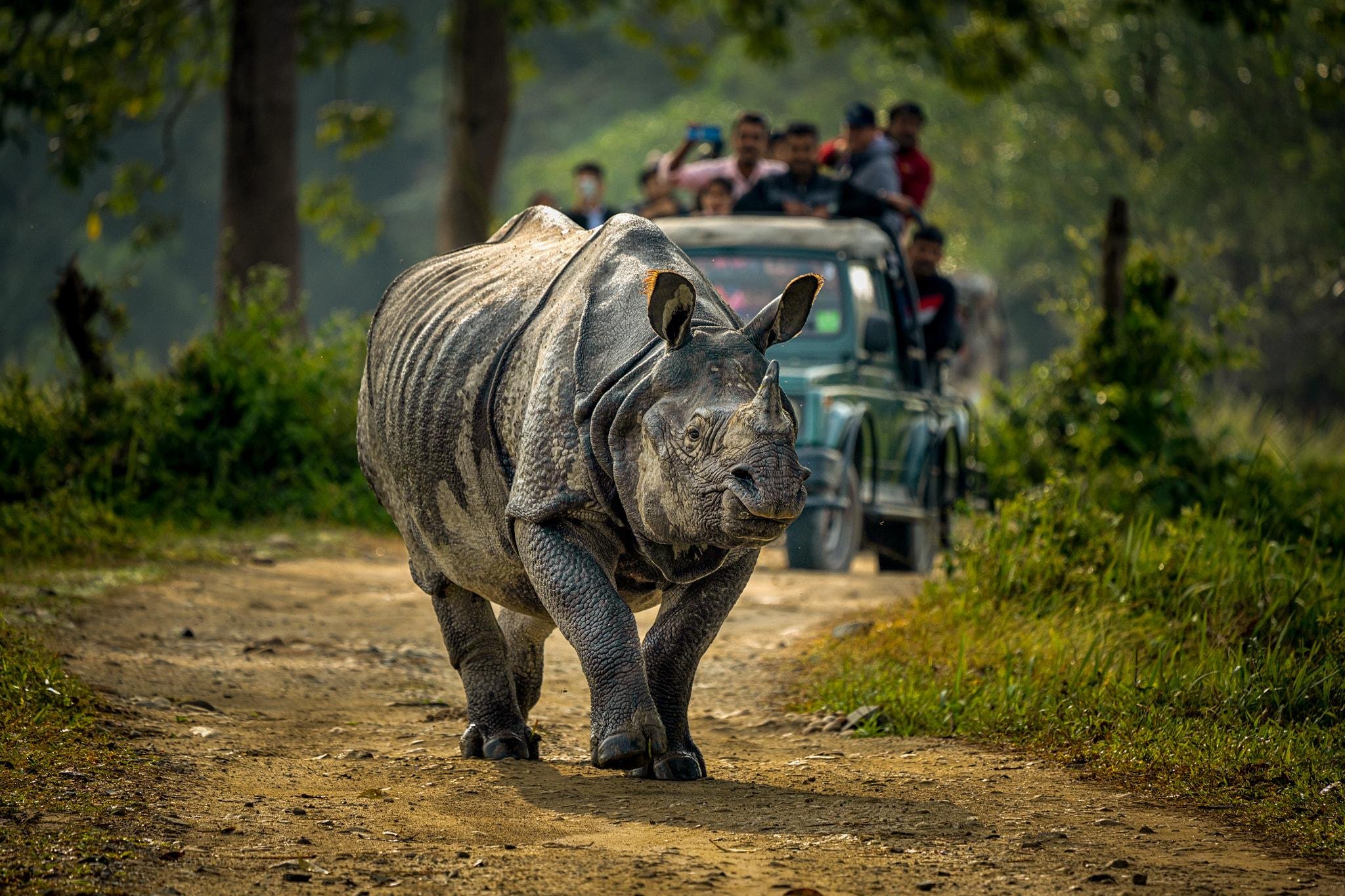
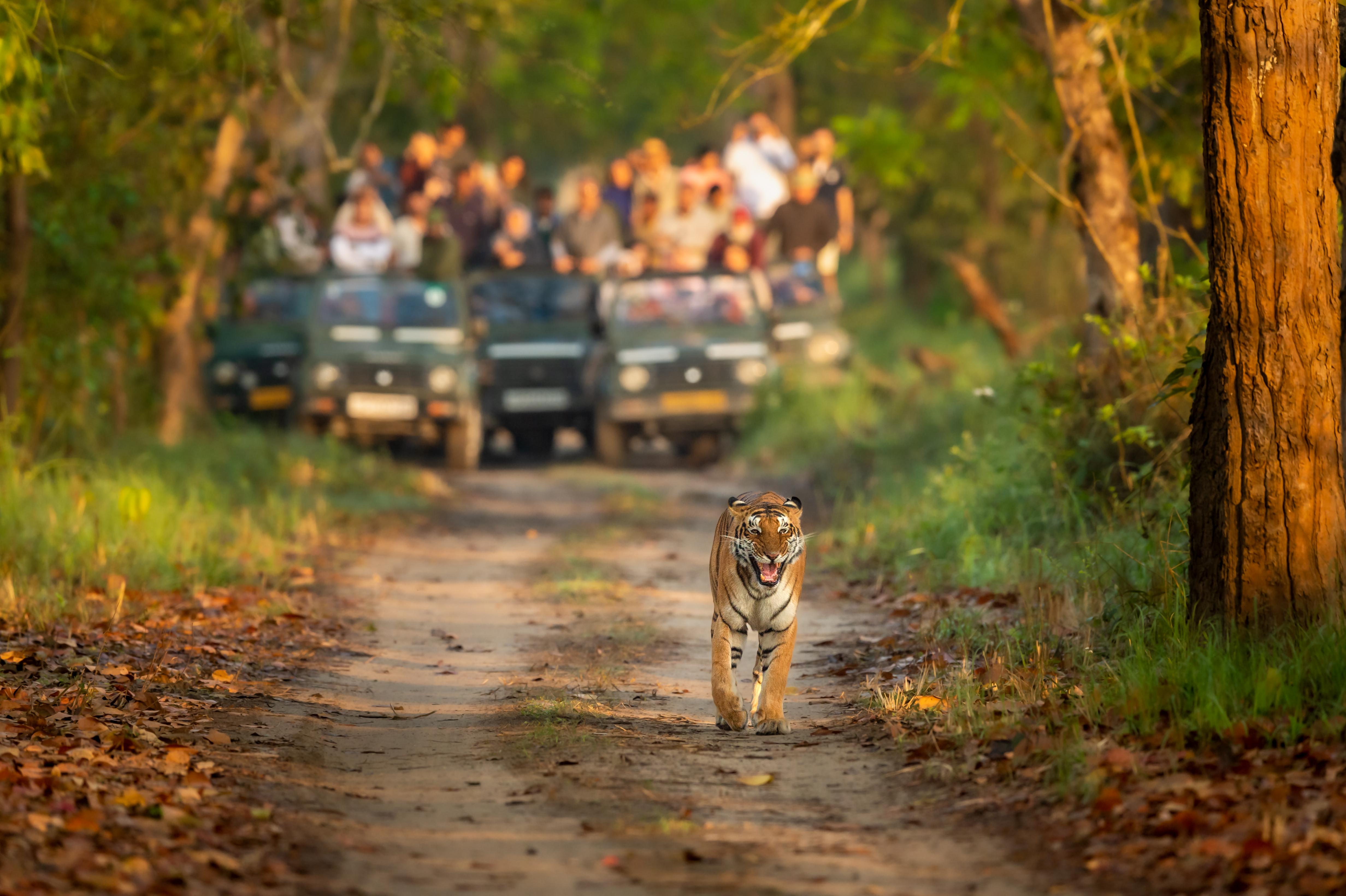
Chitwan was once a royal hunting reserve so thick with malaria that outsiders rarely survived a season in it. For centuries the Terai lowlands belonged to the Tharu, whose inherited resistance to the disease let them farm and fish where others could not. That natural quarantine preserved the forest by accident. It ended in the 1950s, when DDT spraying opened the valley to settlement and two-thirds of the woodland fell within twenty years. The rhinoceros paid first. Numbers collapsed from roughly 800 to fewer than 100 by 1966. Nepal responded in 1973 by gazetting Chitwan as its first national park, 932 square kilometres of sal forest, riverine grassland and floodplain along the Rapti, Reu and Narayani rivers. UNESCO added it to the World Heritage list in 1984. Today a chitwan national park safari package at sauraha is built on that recovery: greater one-horned rhinos again number in the high hundreds, and the park is a stronghold for Bengal tigers, gaur, sloth bears and gharial crocodiles. Sauraha sits on the park's northern boundary at Ratnanagar, in Chitwan District, Bagmati Province, separated from the reserve by the shallow Rapti. It began as a scatter of Tharu houses and became the principal gateway village, which is why chitwan jungle safari tour operators cluster along its single riverside road. Dugout canoes carved from single kapok trunks still ferry visitors across; the Gharial Breeding Centre and Elephant Breeding Centre both lie within a short ride. The park's ecology rewards attention. Tall phanta grassland — elephant grass reaching four metres — hides the rhinos that graze it. Sal dominates the drier ridges; simal and khair line the water. More than 500 bird species have been recorded, among them the Bengal florican and the giant hornbill. Community forests and the Buffer Zone, declared in 1996, share park revenue with local villages, a model widely copied across Asia. That conservation history is what visitors actually pay into. Park entry stands at 2,000 NPR for a foreign adult, per entry, and gates run 06:00–18:00 daily. The multi-day trips sold here — three-day tours from Kathmandu or Pokhara, private three-day safaris, four-day all-season packages, and itineraries pairing wildlife with Tharu culture — all draw on the same protected landscape. Anyone weighing chitwan national park safari package at sauraha tickets is buying access to a rescued ecosystem, not a manicured one.

"The forest survived for centuries because malaria guarded it better than any law."
Your experience

What a tour day looks like

A step-by-step walkthrough of the visit — what you'll see, how long each stage takes, and the details that matter.

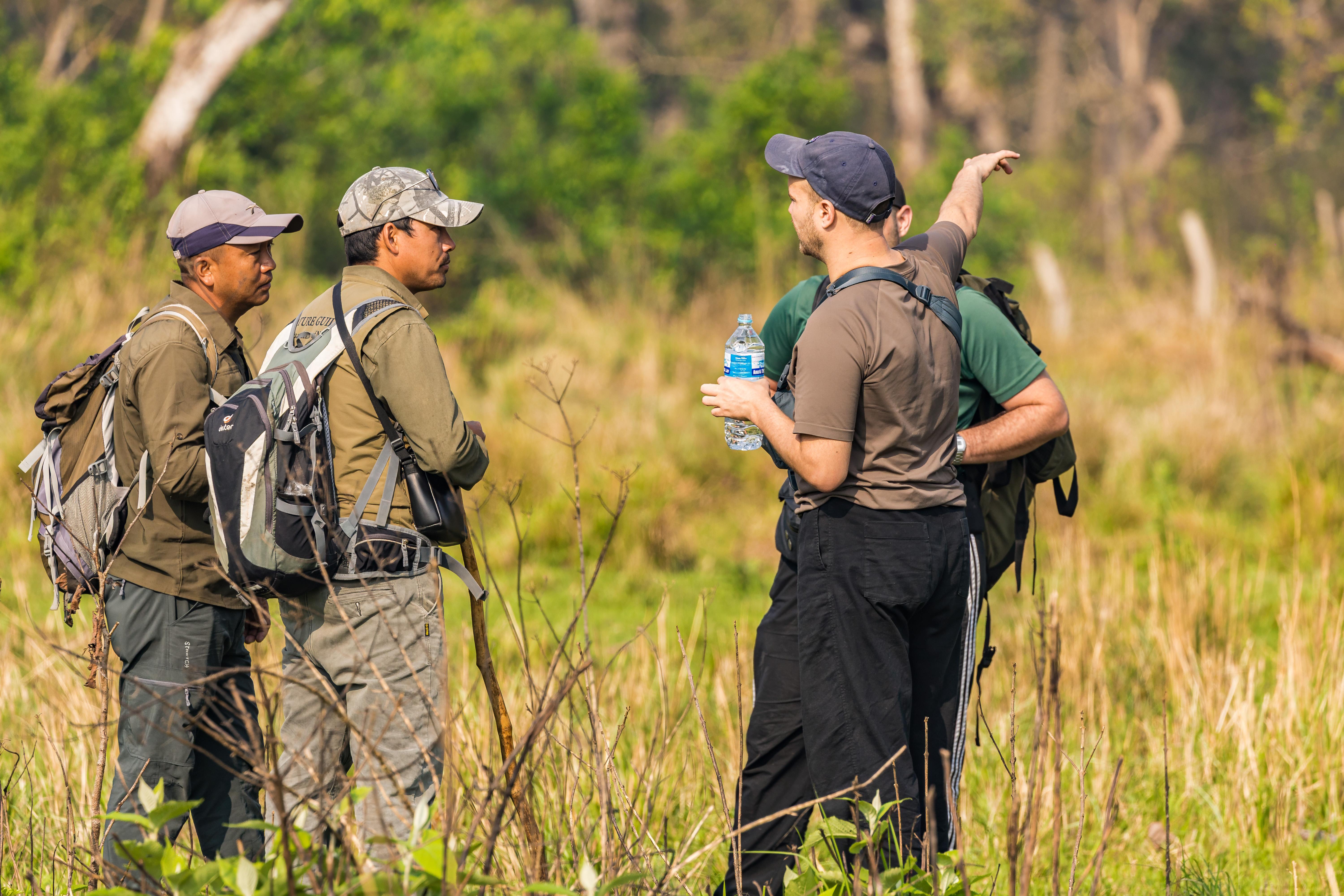
You wake in Sauraha before the heat arrives. Park gates open at 06:00–18:00, and the walk from the village lodges to the Rapti bank takes ten minutes on a dirt road still damp with dew. You pay 2,000 NPR at the entry post if you are a foreign adult, then wait while a guide checks permits. You step into a dugout canoe hollowed from a single trunk. It rides low — inches of freeboard — and you keep your hands inside as gharials sun themselves on the far bank. On the other side you follow a naturalist single-file through sal forest, learning to read rhino tracks and tiger scrape marks in the sand. By mid-morning you are in a jeep on the grassland tracks, scanning four-metre elephant grass for movement. You stop at the Gharial Breeding Centre, where hatchlings are reared for release into the Narayani. Afternoon brings the Elephant Breeding Centre and a slow drift downriver as light drops. Evening returns you to the village. A Tharu stick dance runs in the community hall, drums keeping time under a tin roof. Most chitwan national park safari package at sauraha tours fold a second and third day into the same rhythm — deeper into the park, further from the road — and the longer chitwan national park safari package at sauraha tour options add a fourth.

Frequently asked

Frequently asked questions about chitwan national park safari package at sauraha tours

What are the opening hours for a Chitwan National Park safari package at Sauraha?

The park is open every day from 06:00 to 18:00. For the Chitwan National Park safari package at Sauraha, arriving between 06:00 and 08:00 gives you the best light and cooler temperatures.

What is the foreign adult entry fee for the Chitwan National Park safari package at Sauraha?

The published foreign adult entry fee is 2,000 NPR per entry. If your live product grid includes a separate package price, use that as the bookable rate and treat the park fee as the conservation entry charge.

Where is the Chitwan National Park safari package at Sauraha located?

The address is Sauraha, Ratnanagar, Chitwan District, Bagmati Province, Nepal. That is the main tourist gateway for the Chitwan National Park safari package at Sauraha.

How do I get to the Chitwan National Park safari package at Sauraha by road?

By road, the Sauraha side is reached via Tandi/Ratna Nagar, and the park’s official services page lists public buses, tourist coaches, and airline links to Chitwan. Bharatpur is the usual transfer hub for the final leg.

Is the Chitwan National Park safari package at Sauraha suitable for families with children?

Yes, the Chitwan National Park safari package at Sauraha is one of the easiest ways to visit Chitwan with children because the visitor center and breeding-center stops are short and structured. Keep the day focused on one safari and one or two interpretation stops rather than a long, late itinerary.

What should I wear for the Chitwan National Park safari package at Sauraha?

Light, breathable clothing and closed-toe shoes work best. The morning window is cooler, but by late morning the Sauraha area gets warm quickly in summer.

Can I bring bags on the Chitwan National Park safari package at Sauraha?

Bring only a small day pack and avoid bulky luggage. The park entry process is faster when you are not handling multiple bags at the gate or on transfers.

Are cameras and drones allowed on the Chitwan National Park safari package at Sauraha?

Cameras are fine for normal sightseeing and wildlife viewing, but drones and documentary filming need separate permission. Keep recording gear compact, especially around visitor centers and safari vehicle boarding points.

What is the best time to visit the Chitwan National Park safari package at Sauraha?

Autumn and winter are usually the most comfortable for long outdoor time, while summer brings heat and monsoon rain. For the Chitwan National Park safari package at Sauraha, the safest daily plan is still the early 06:00–08:00 arrival window.

What is the cancellation policy for chitwan national park safari package at sauraha tickets?

If your booking is cancelled at least 24 hours before the start time, the refund follows the live tour grid attached to the booked product. The park entry component is based on the published 2,000 NPR foreign adult fee, so check the product terms for the package portion of the refund.

Which nearby attractions can I combine with the Chitwan National Park safari package at Sauraha?

The easiest add-ons are the Visitor Center at Sauraha, the Elephant Breeding Center at Khorsor, and the Gharial Breeding Center near Kasara. These fit naturally with a Chitwan National Park safari package at Sauraha without requiring a second day.